
How Much Does It Cost to Learn Kitesurfing?
The best destination for learning kitesurfing
Ideally, it would be “close to home,” but wind patterns —Northern Trade Winds, Seasonal Southern Winds, Thermal Winds, Asian Monsoons and Southern Trade Winds— have their own calendar, and forecasts do not always prove accurate, especially now with climate change.
The best approach is therefore to look for places with the best water temperatures and the widest range of wind conditions during the months when we have time for a holiday, allowing us to start learning and improve our skills in the sport.
However, we must also take into account the challenges of each location: large waves, difficult access to the water, cold sea or lake temperatures, currents and potential hazards.
It is also important to choose a destination that is easy to reach —close to airports, well connected by road and reasonably priced— and where costs are affordable not only for kitesurfing lessons but also for transportation and accommodation.
And if we’re lucky, one of these destinations may be not too far from where we live.
The relative cost of kitesurfing lessons
If a kite course is taught in a large group, or there is no wind, you’d be better off staying home watching videos online.
Kitesurfing is a sport that can only really be learned when you have a kite in your hands and enough wind for it to generate lift. What makes you fall in love with kiteboarding is the wind and its power, which invites you to learn the technique needed to control it.
Group courses are usually cheaper than individual lessons but, in the long run, they can end up costing more, because you may need to invest many more hours to reach the same goals.
Controlling the kite, getting into the water with the board, recovering the board and riding it are different stages for every student. That is precisely what makes teaching this sport in groups difficult.
Although you can observe the mistakes other students make, you only really learn from your own.
The main difficulty with shared courses is that two or more students rarely learn this sport at exactly the same pace.
The impossible destination and runaway costs
One reason not to choose a destination for a kitesurfing course is the difficulty of getting there.
There are wonderful places that look spectacular on social media but can only be reached by small aircraft. There are paradisiacal locations that require a sailboat to enjoy properly, as well as remote destinations that involve long journeys or areas where security conditions or extreme natural conditions can be a concern.
Water temperature and marine wildlife can also be significant risk factors: water below 5°C, stingrays, sharks and jellyfish.
It is always worth checking accommodation prices and reasonable transportation options, and making sure that the school you choose —even if it is located in an affordable destination— provides adequate local transportation to the actual training spot without excessive additional costs.
Many schools teach their courses far from their main base. So, always ask.
The language filter
It may seem like an obvious question, but it isn’t:
Are kitesurfing lessons available in the languages I speak?
Learning a new language and a new sport at the same time can be difficult.
Make sure you choose a school that offers multilingual instructors, especially in remote areas where there may not be teachers who speak your language.
It is much better to receive clear instructions in a language you understand so that the language barrier does not interfere with your learning.
During part of the lesson, the student wears a radio in the helmet and the instructor gives instructions from a distance. In that situation, being able to understand exactly what the instructor is saying can make practice much more efficient.
It is different if you already know how to ride and simply want to practice while having someone available to rescue you if you drift away. In that case, language becomes much less relevant.
Respectful and qualified instructors
The reputation of the school and its instructors, generally reflected in customer reviews, is a useful indicator when making your choice.
If students learn the sport within the amount of time they were promised, that is a good indication of teaching quality.
If a school starts making excuses such as saying that the student lacks flow for the wind, has learning difficulties or that the conditions are too extreme, this says a great deal about the school and its instructors.
Another important aspect is the way customers are treated: indifference, neglect or disrespect are good reasons to stop taking lessons.
It is not enough for instructors to be friendly and excellent riders. What really matters is that they are properly trained to teach efficiently, that they have completed kitesurfing instructor training and that they maintain a standard of respect and quality.
If you start a course and something does not feel right with your instructor, do not hesitate to ask the school for a different teacher, or change schools.
How many hours do I need to learn kitesurfing?
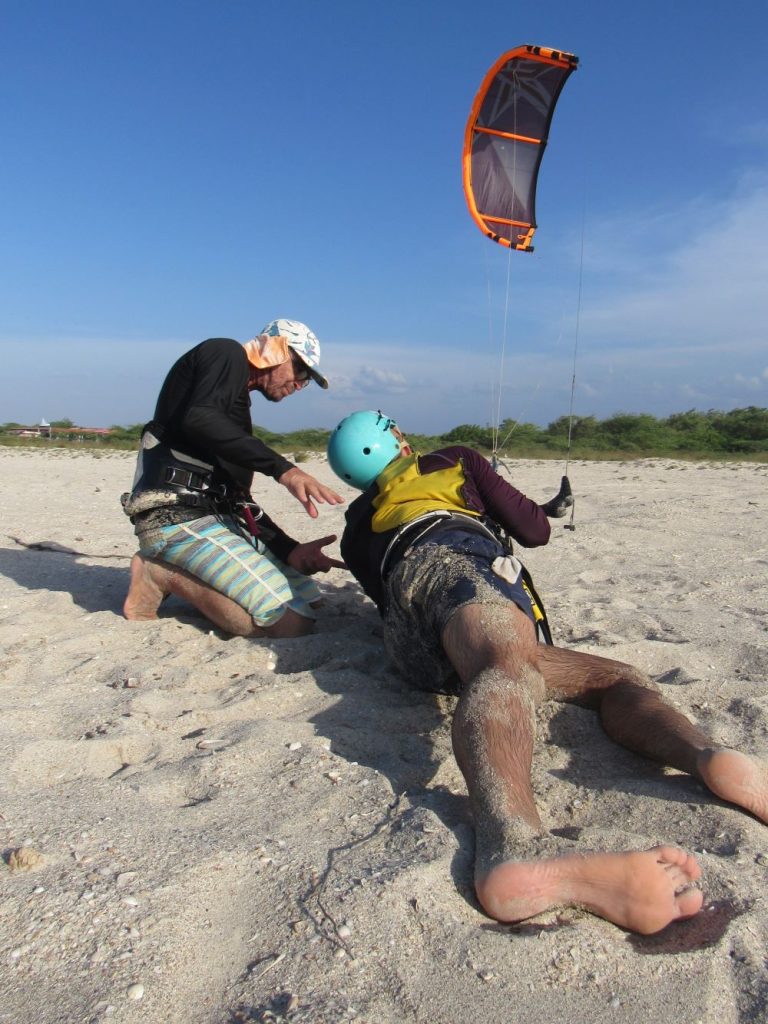
For someone without learning difficulties, the minimum is an 8-hour kitesurfing course (3 days).
If the course is properly taught, the conditions are good and the equipment is appropriate, by this point you should learn how to get up on the board and ride in both directions, even if you only achieve this goal during the final hour.
You may still want to consolidate everything you have learned. That is why a 10-hour course, or even a 12-hour course (5 days), allows students to become more comfortable riding in both directions and eventually become completely independent.
If you have already learned how to ride but simply want a refresher, one or two hours may be enough to get familiar with the sport again.
To avoid having a school make you repeat an entire course you have already completed, it is important to have a certificate issued after the first eight hours.
Check whether the school offers one and how much it costs. The most widely recognized is the IKO certificate.
Payment methods and quality assurance
I would think twice before paying “everything” upfront for a kitesurfing course.
Many things can change during your lessons: the weather may change, you may not like the school, you may have difficulty reaching the location or you may not be able to complete all the agreed hours.
In my opinion, the best way to make a reservation is to pay a small percentage before arriving to secure your place, make another payment halfway through if everything is going well, and pay the remaining balance when the course is completed.
It is important to keep track of the actual lesson time.
Some schools consider the lesson to begin when the equipment is handed over to the student. For others, the clock starts once the kite is in your hands and flying.
It is worth clarifying this with the school before you start.
Always ask your instructor how much time you have actually completed at the end of each session. This will make you feel more comfortable when it comes time to pay.
If there is a technical problem, which can happen, the student should not be charged for the time spent solving it.
Schools with suitable equipment
Everything can be right: the wind, calm water, little current and a suitable instructor. But poor equipment can make learning much more difficult.
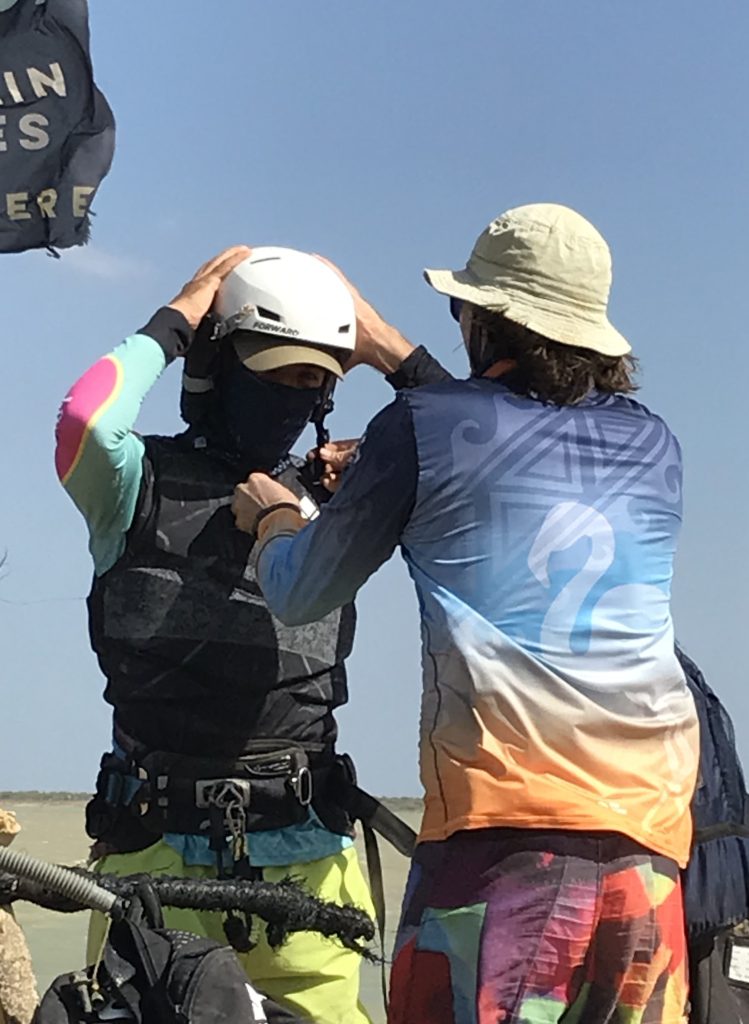
Make sure the kites are in good condition and that all safety equipment works properly.
You can usually find information about the quality of a school’s equipment in customer reviews online.
It is better to avoid schools that hold students responsible for equipment damage or loss without clearly explaining their policies beforehand. Ask first, because a kitesurfing course can become very expensive if you damage a kite.
Equipment maintenance and technical failures should be the school’s responsibility. The instructor is responsible not only for the student’s safety but also for taking proper care of the equipment.
If you are renting equipment after completing your course, consider taking out damage or loss insurance. It will almost always be cheaper than paying for damaged equipment.
And what about the price?
Some spots may appear to have similar prices. However, in destinations where prices are not quoted in US dollars, the actual cost can vary significantly depending on the exchange rate —the US dollar or euro against the local currency.
For this reason, if prices are quoted in local currency, make sure that the price for your trip is agreed with the school in advance, preferably in US dollars or euros.
Some currencies are highly volatile, and the value of the dollar can rise or fall significantly within a few months. It is worth keeping this in mind to avoid surprises.
You can monitor exchange rates in the countries you visit and potentially benefit from favorable currency movements when booking your kitesurfing course.
It is also worth keeping an eye out for special offers and discounts during the low season, which many kitesurfing schools offer in different destinations.
Low season has several advantages:
- Less crowded beaches.
- Better prices at hotels and restaurants.
- More personalized attention from the kitesurfing school.
- Fewer students during these periods.
However, always ask whether the wind conditions, even during the low season, are sufficient to run the course.
How much does a kitesurfing course cost?
To finish, let’s look at the average cost of a 10-hour kitesurfing course in some of the world’s most popular destinations.
Keep in mind that you also need to calculate the cost of flights, transportation to the spot, accommodation and food in the area.
🔴 Low price
| Destination | 10-hour course | Season | Spot difficulty |
|---|---|---|---|
| Cumbuco | US$384–462 | August–January | Easy |
| Vietnam | US$450 | December–February | Difficult |
| El Yaque | ~US$490 | January–June | Easy |
🟠 Medium price
| Destination | 10-hour course | Season | Spot difficulty |
|---|---|---|---|
| Dakhla | ~US$620–638 | March–October | Easy |
| Cabarete | US$600 | June–August / December–April | Difficult |
| Mayapo | US$662 | December–September | Very easy |
🟡 Medium-high price
| Destination | 10-hour course | Season | Spot difficulty |
|---|---|---|---|
| Sicily | ~US$730 | May–September | Easy |
| Tarifa | ~US$798 | May–October | Very difficult |
🔵 High price
| Destination | 10-hour course | Season | Spot difficulty |
|---|---|---|---|
| Aruba | US$855 | January–September | Easy |
| Egypt | ~US$900 | Year-round | Very easy |
When are you going to start?
The only question left is when are you going to start?
Now you’re ready to choose your destination and begin your kitesurfing course.
And what happens next? After learning the sport, you’ll want to ride more and more. You’ll probably rent equipment for a while and, if your enthusiasm continues, eventually buy your own gear.
One by one, you’ll discover many kitesurfing destinations around the world.
That’s what happens to most people.
Good luck with your choice, see you on the water.
By Paula Sanmartin

0 Comments